Fun Frenzy Trivia Play Offline
- 4.5
- Rating
- 1.00M
- Installs
- Free
- Price
 Analysis by App-foxy
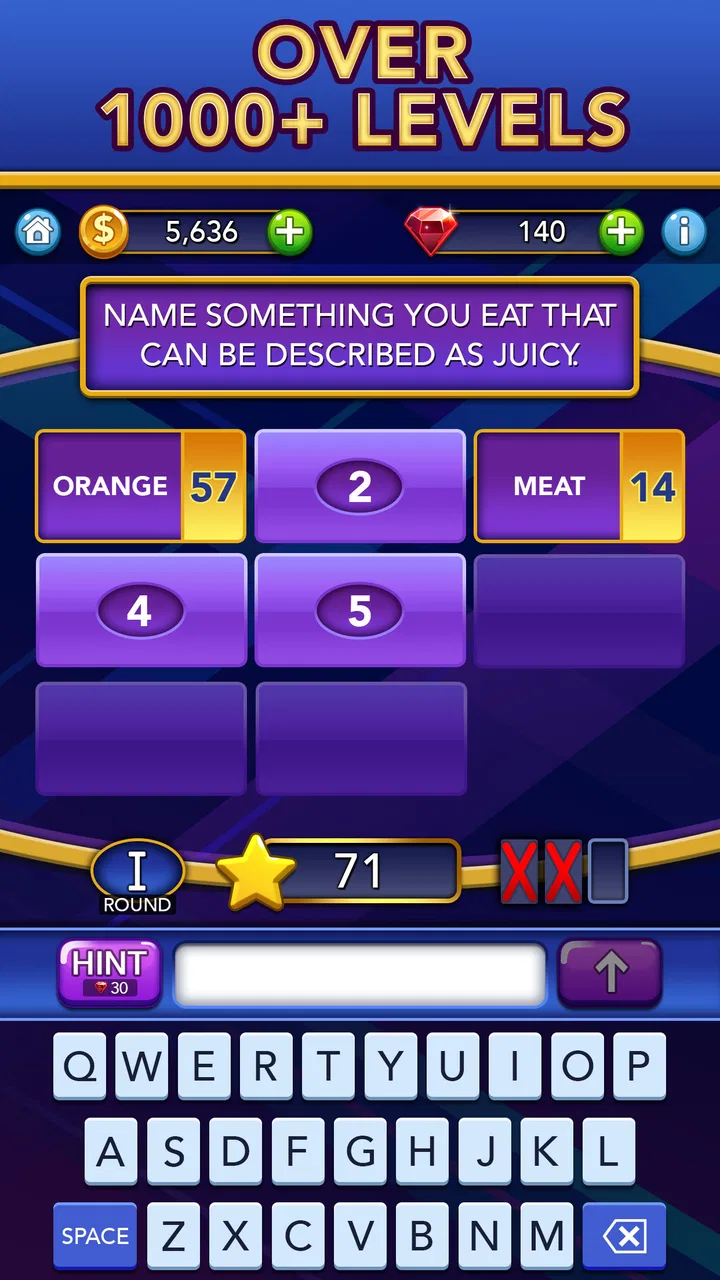
I spent time with Fun Frenzy Trivia Play Offline as a casual trivia game, and my first impression was that it understands the appeal of quick question rounds. It is built around guessing popular answers and trying to score well, rather than asking you to study a long rulebook before you can enjoy it. That makes it easy to pick up when I have a few spare minutes, especially when I want something lighter than a strategy game or a full quiz show simulation.
The important phrase here is “casual trivia.” I would not approach this as a detailed reference tool or a serious academic test. Its appeal is the quick reaction, the satisfaction of recognizing a familiar answer, and the small challenge of deciding what other people are likely to choose. That distinction matters because the game is most enjoyable when I treat it as relaxed entertainment rather than a definitive measure of knowledge.
How the game fits into everyday play
The game comes from Super Free and sits in the trivia category. It is free to install, with optional in-app purchases listed from $0.99 to $49.99 per item. That gives the basic experience an accessible starting point, while the purchase range means I would pay attention to any confirmation screen before spending money. The free entry is the clearest part of its value: I can try the central idea without committing to a paid download.
You May Also Like

 Blood Strike: 2.5 Anniversary
Blood Strike’s Loadouts Turn Every Drop Into a Tactical Gamble
A close look at Blood Strike’s custom loadouts: how fast access to signature weapons reshapes its battle royale rhythm, rewards preparation, and narrows the gap between fights.

 Pandora - Music & Podcasts
Pandora’s Music Is Easy to Start, but Harder to Recover
Pandora’s strength is its low-effort path from a seed to a station. Its weak spot is how much confidence it asks you to place in connection, setup, and quiet recovery.

 8 Ball Pool
 Is Built on Rivalries, Rematches, and Routine
A close look at the rivalries, rematches, shared routines, and unanswered safety questions that turn a quick pool match into a persistent mobile community.

 Samsung Music
’s Quiet Strength Is Playing What You Already Own
Its reach comes less from spectacle than from dependable access to a personal library. That simplicity is both the app’s strongest retention engine and its ceiling.

 AccuWeather: Weather Radar
AccuWeather Review: A Quick, Clear Forecast for Everyday Decisions
For everyday plans, the best forecast is the one you can understand quickly. AccuWeather makes rain timing, radar, and local conditions easy to act on, with a few trade-offs.

 Hill Climb Racing
Why Hill Climb Racing Still Turns Crashes Into One More Run
A tiny car, a bumpy hill and one more upgrade: Hill Climb Racing keeps resurfacing because its simple chaos makes every near-miss feel personal.
More From Our News Desk



It is rated for Everyone, which makes the tone suitable for a broad audience. I could imagine opening it during a short break, passing the phone around with a friend, or using it as a low-pressure way to keep my mind active while waiting. It is also a reasonable choice for someone who enjoys general-knowledge prompts but does not want the intensity of a timed competitive quiz platform.
The game was released on November 3, 2022, and its current version is 1.296. It requires Android 7.0 or later. Those details make it relevant to people using older Android phones, although the actual experience will still depend on the device and operating system. I would check compatibility before planning to use it on a particularly old handset.
Its reach is substantial, with over a million installs, a 4.5 average from around ten thousand ratings, and roughly 1.3 thousand written reviews. I do not treat popularity as proof that every player will enjoy it, but those figures suggest that the basic format has found an audience. More useful to me is the fact that the game is easy to understand: the premise can be explained in one sentence, which removes much of the friction found in more complicated trivia apps.
What I actually value in the format
The strongest part of this style of trivia is that knowing the answer is only one piece of the puzzle. When the goal is to guess popular answers, I have to think about common opinions and familiar associations, not just obscure facts. That creates a different kind of challenge from a traditional multiple-choice quiz. A person who knows a lot may still choose poorly if they overthink what ordinary players are likely to say.
That makes each round feel more social in spirit, even when I am playing alone. I find myself asking, “What would most people pick?” rather than simply searching my memory for a fact. This is a useful change of pace for anyone who has become tired of trivia games that reward only specialist knowledge. It also gives casual players a fairer chance to stay engaged.
Another practical strength is the low learning curve. I do not need to memorize controls, manage a complicated collection, or understand a long progression system before starting. The game works best as a small entertainment habit: open it, answer a few prompts, and stop when I am ready. That makes it easier to fit into a commute, a lunch break, or an evening when I want stimulation without a large time commitment.
There is also a subtle difference between playing for accuracy and playing for score. If I focus only on what I personally believe is correct, I can miss the point of a popular-answer question. My better results come when I pause briefly and separate my own preference from the answer most likely to be recognized by a broad audience. That is a simple strategy, but it changes how I approach the game and gives repeat sessions more thought than I expected.
Three ways I would use it
My first use case would be a short solo session. I would play when I wanted something more active than scrolling but did not have enough time for a long game. The format is well suited to that situation because trivia has a natural stopping point after a handful of questions. I would not need to reserve a whole evening or remember a complicated story state.
The second use case is informal group play. Even without treating it as a formal party game, popular-answer questions invite discussion. Friends can compare whether they chose the statistically obvious response or the answer they personally preferred. The disagreement is part of the fun, particularly when someone knows the subject well but misjudges the common choice.
The third use case is light mental warm-up. I would use it before studying, during a break from desk work, or when I want to switch attention away from repetitive tasks. It is not a replacement for structured learning, but it can encourage quick recall and flexible thinking. The useful habit is to review why an answer felt obvious or surprising, rather than tapping through every question without reflection.
Where the free price helps, and where caution matters
Because the game is free to install, I see little reason not to test it if this type of trivia appeals to you. The free access lowers the risk of discovering that the format is not your style. I would spend a few sessions learning whether I enjoy guessing popular responses, rather than assuming that a strong general-knowledge background automatically guarantees fun.
The optional purchase range changes the value conversation. I can accurately say that the game offers a free starting point and that paid items are available, but I would not assume that buying anything is necessary for enjoyment or that a purchase automatically improves the experience. The sensible approach is to decide whether the free version already gives enough entertainment before considering an optional item.
I also recommend treating the highest listed purchase carefully. A large gap between the smallest and largest item means the cost of optional spending can vary considerably. I would never tap through quickly during a competitive or frustrating moment. Instead, I would read the purchase screen, confirm the amount, and ask whether the benefit solves a real annoyance or merely encourages another round.
This is where the game’s free status is both a strength and a reason to stay alert. Free installation makes experimentation easy, but it does not mean every available element has no cost. For me, the best value is achieved by using the game as a no-commitment trivia pastime and treating purchases as optional rather than as part of the basic admission price.
The trade-offs I noticed
The popular-answer format is not ideal for everyone. If you prefer questions with one clearly provable answer, this style may feel less satisfying. A conventional knowledge quiz can be better when you want to learn precise facts, compare scores through objective answers, or focus on a specific subject such as history, science, or geography.
I also would not choose this game when I want a deep solo progression system. Its main attraction is the question-and-score loop, so players looking for character development, exploration, or a substantial narrative should look elsewhere. The simplicity that makes it convenient can also make it feel limited if I play for too long in one sitting.
Another trade-off is the possibility of overthinking. Since the goal involves popular choices, my most unusual answer may be intellectually interesting but strategically weak. That can be frustrating if I feel that a less accurate or less personally appealing response is rewarded simply because it is more common. I learned to treat that tension as the central rule of the game, but players who dislike popularity-based outcomes may prefer standard trivia.
The game also depends on the player enjoying general prompts rather than a tightly defined subject. That broad approach is useful for mixed groups, but it may not satisfy someone who wants a specialist challenge. A dedicated quiz app focused on a favorite topic would be a better choice for deliberate practice or serious knowledge testing.
Finally, the free model requires a little purchase awareness. I appreciate being able to try the game without paying upfront, but I would keep my expectations realistic about optional items. The free version is the basis for my recommendation; I would not recommend spending simply because a session becomes difficult or because I want to move faster.
Who is most likely to get value from it?
I think the best audience is someone who enjoys quick trivia but wants questions shaped around familiar, widely recognized answers. It is especially suitable for casual players who may not consider themselves quiz experts. The game gives them a reason to trust common sense and social awareness, not just a large store of specialist facts.
It can also work for households with different levels of knowledge. A family member who rarely plays games can understand the premise quickly, while a regular trivia fan can still find a challenge in predicting the popular response. The Everyone rating supports that broad positioning, although individual preferences will still determine whether the subject matter feels engaging.
I would also recommend trying it to people who need a compact distraction. If your ideal mobile game can be opened for a brief session and abandoned without consequence, this is a more natural fit than a game that expects daily management or long uninterrupted play. The free download makes that trial especially straightforward.
On the other hand, I would skip it if your main goal is formal education, highly specialized questions, or a fully objective test of knowledge. I would also skip it if optional purchases make you uncomfortable in any free-to-play game, even when you can begin without paying. In that case, a paid trivia title with a clearly stated one-time price may provide a cleaner experience, assuming its content matches what you want.
My practical approach to playing
I get more from the game when I use a two-step decision process. First, I consider the answer that immediately comes to mind. Then I ask whether it is likely to be familiar to a wide range of people. That second check is often more important than searching for an obscure alternative. It is a small adjustment, but it makes the game’s central idea clearer and helps prevent needless hesitation.
I would also avoid judging the experience from one unlucky session. Trivia outcomes can feel uneven because a player may know a subject well but still choose an unpopular response. After a few rounds, I can tell whether I enjoy that kind of uncertainty. If I do, the game has lasting casual value; if I do not, no amount of practice will turn the format into a traditional fact quiz.
For group play, I would encourage everyone to explain their choice before seeing the result. That turns each question into a short conversation and exposes the difference between personal taste and common expectation. It also makes the game more enjoyable for people who are less interested in chasing the highest score.
For spending, my rule would be simple: play the free version first, decide whether the core loop is already entertaining, and only then inspect optional items. I would not treat a purchase as a requirement for proving skill. The game’s strongest value comes from the accessible question format, not from assuming that payment is needed to make a casual session worthwhile.
My verdict for Android players
After looking at the format, the free entry point, and the limitations, I see Fun Frenzy Trivia Play Offline as a good fit for relaxed trivia fans rather than dedicated quiz competitors. Super Free has created something approachable for quick play, and the popular-answer angle gives it a different feel from a standard question bank. I like that it rewards awareness of common choices as well as personal knowledge.
My recommendation is to try the free experience first and keep purchases optional. That is the clearest way to judge its value without confusing access with paid extras. If you enjoy short rounds, broad trivia, and the challenge of predicting what many people would answer, it can become a handy break-time game.
I would choose another option for precise learning, specialist subjects, or a guaranteed no-purchase experience. Those are not flaws so much as boundaries of this particular design. For the right player, though, the combination of easy entry, a broad age rating, and a popularity-based scoring idea makes it worth testing. Its 4.5 average and million-plus installs suggest plenty of people find that formula appealing, and my own view is that it earns a place on an Android phone when casual, social-feeling trivia is what I want.
FAQs for Fun Frenzy Trivia Play Offline
01What is Fun Frenzy Trivia Play Offline about?
Fun Frenzy Trivia Play Offline is a captivating trivia game designed to test your knowledge across various categories. It allows players to enjoy challenging questions without needing an internet connection, making it ideal for on-the-go gaming. With multiple levels and a wide range of topics, it offers endless entertainment for trivia enthusiasts.
02Can I play Fun Frenzy Trivia without an internet connection?
Yes, one of the key features of Fun Frenzy Trivia Play Offline is its offline capability. You can enjoy the game without needing an internet connection, making it perfect for travel or areas with limited connectivity. This feature ensures that your trivia fun is uninterrupted anywhere you go.
03What types of questions are included in the game?
Fun Frenzy Trivia Play Offline includes a diverse array of questions spanning categories such as history, science, pop culture, sports, and more. Each category is designed to challenge your knowledge and improve your trivia skills. The variety ensures that players of all interests will find something engaging.
04Is there a multiplayer mode in Fun Frenzy Trivia Play Offline?
While Fun Frenzy Trivia Play Offline primarily focuses on solo gameplay, it offers a multiplayer mode where you can challenge friends or family. This feature adds a competitive edge to the game, allowing you to compare scores and see who knows more about different trivia topics.
05Are there in-app purchases in Fun Frenzy Trivia Play Offline?
Fun Frenzy Trivia Play Offline is free to download, but it does offer in-app purchases. These can enhance your gaming experience by unlocking additional levels, removing ads, or providing hints. While purchases are optional, they can provide extra value for those who wish to expand their gameplay.
Pros
- Engaging and diverse questions.
- No internet needed for gameplay.
- Simple and intuitive interface.
- Frequent updates with new content.
- Suitable for all age groups.
Cons
- Ads can be intrusive.
- Limited free hints available.
- Repetitive questions over time.
- No multiplayer mode offered.
- In-app purchases can be pricey.

Fun Frenzy Trivia Play Offline
Gallery